
Glassware: tool, ritual, and why it still matters
Does the glass change the wine? Yes, sometimes a little, sometimes a lot. Shape, rim, and bowl size can focus aroma, soften edges, and keep temperature steady. You don’t need a cupboard full of shapes to drink well. You need one smart all-rounder and a clear idea of when a different bowl helps.
What a good glass actually does
- Focuses aroma. A tulip shape concentrates the bouquet so you smell more and swirl less.
- Softens texture. Thin rims feel seamless. Wine glides rather than bumps into a thick lip.
- Controls temperature. Tall stems keep hands off the bowl so whites stay fresh and reds don’t warm up.
Our one-glass solution
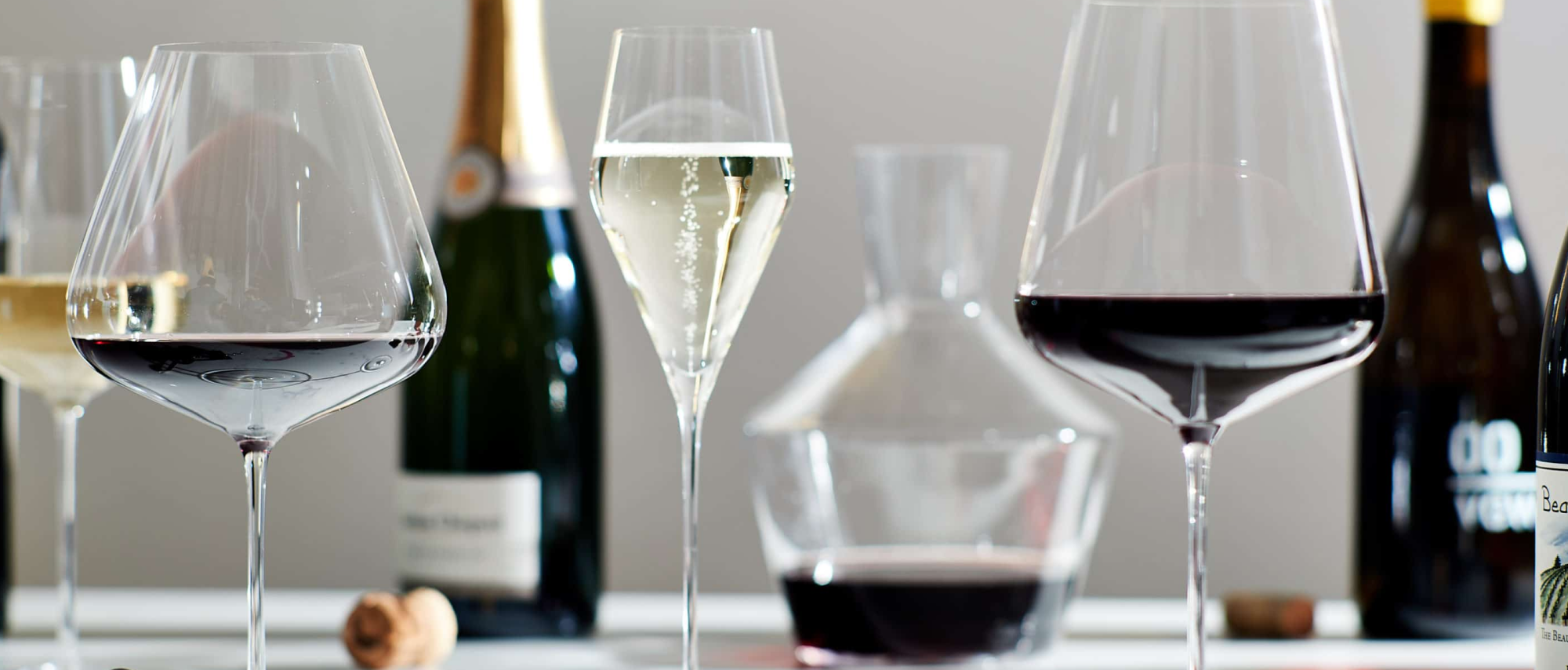
If you buy one glass, buy a tulip-shaped, thin-rim, medium-large bowl. Our pick is the Riedel Performance Pinot Noir. It looks like a Pinot glass, but it handles most styles with elegance:
- Wide belly, narrow chimney for bouquet focus
- Ultra-thin rim for smooth entry
- Tall stem for temperature control
Use this as your daily driver. Then add a second shape only if your table demands it.
When to switch shapes
-
Structured reds like Cabernet, Syrah, or powerful blends
Use a larger, wide-bowl glass when tannin is firm and alcohol is high. You give the wine space to relax. -
Delicate reds like Pinot Noir, Nebbiolo, Grenache
Stay with a tulip. Large belly, slightly tighter top. You protect perfume and lift. -
Crisp whites and rosé such as Riesling or Chenin
A universal tulip works. If the wine is very linear, a slightly shallower bowl keeps it bright. -
Rich whites like barrel-aged Chardonnay or Rhône blends
A larger bowl lets texture spread without feeling heavy. -
Sparkling
Choose a medium tulip. Skip flutes. You want room for aroma and a steady mousse. -
Sweet and fortified
Smaller tulip. Concentrates aromatics and keeps pours modest.
Care that keeps the wine honest
- Wash by hand with hot water. Skip scented detergent or rinse thoroughly to avoid perfume in the bowl.
- Air dry base-up on a clean cloth. Polish with a lint-free towel while the glass is still warm.
- Store upright with room between stems. Avoid kitchen odors.
- Serve small pours. A third of the bowl is plenty. You want surface area for oxygen and space for aroma.
Temperature meets glass
Right glass, wrong temperature still misses the mark. Keep reds around 16 to 18°C, light reds a touch cooler, crisp whites at 7 to 10°C, fuller whites at 10 to 14°C, and Champagne at 8 to 12°C. If a red needs air on a warm night, chill the decanter in an ice bath for ten minutes and return to the stem.
Hosting made simple
Set the table with one beautiful universal glass per person and a clean decanter. Pour modestly and refresh often. The room stays tidy, the wine stays lively, and the conversation stays about what’s in the glass—not what the glass looks like.
The takeaway
Glassware is part tool, part ritual. Use a well-made universal tulip for almost everything. Switch shapes when structure or style calls for it. Keep bowls clean, pours small, and temperatures in range. You will taste more and waste less. And if you want one name to trust, reach for the Riedel Performance Pinot Noir. It gets you most of the way, most of the time.
Follow us on Instagram
Go to profile


Free insured shipping
On all orders over 190€

Quality guarantee
14 days returns for unopened bottles
Preserved wines
Climate controlled warehouse

Free storage
For all those without a wine cellar